Energize your team collaboration with Lean Coffee
Summary
In this guide, you will learn:
- What Lean Coffee is: an informal, agenda-less meeting format where participants democratically create and prioritize the discussion topics to ensure productive conversations.
- The origins of Lean Coffee, created in 2009 by Jim Benson and Jeremy Lightsmith in Seattle to foster learning and discussion without formal structure.
- How Lean Coffee meetings are typically run, including brainstorming topics, pitching them briefly, voting to prioritize, and time-boxed discussions.
- The benefits of Lean Coffee, such as increased engagement, focus, and efficient use of meeting time, especially for Agile teams and remote collaboration.
- Common use cases for Lean Coffee, including retrospectives, brainstorming sessions, and onboarding new team members to encourage open dialogue.
- Available Lean Coffee templates and tools, like those on Miro, that facilitate running these meetings virtually with clear structure and participant-driven content.
What is Lean Coffee?
Imagine entering a meeting room where the agenda is not predetermined but emerges dynamically based on the group's collective interests. Welcome to Lean Coffee—a meeting format that prioritizes engagement, efficiency, and the exploration of ideas without limitations. It's a space where discussions are not monopolized but democratically decided, ensuring that every topic of interest can be explored.
How does it work?
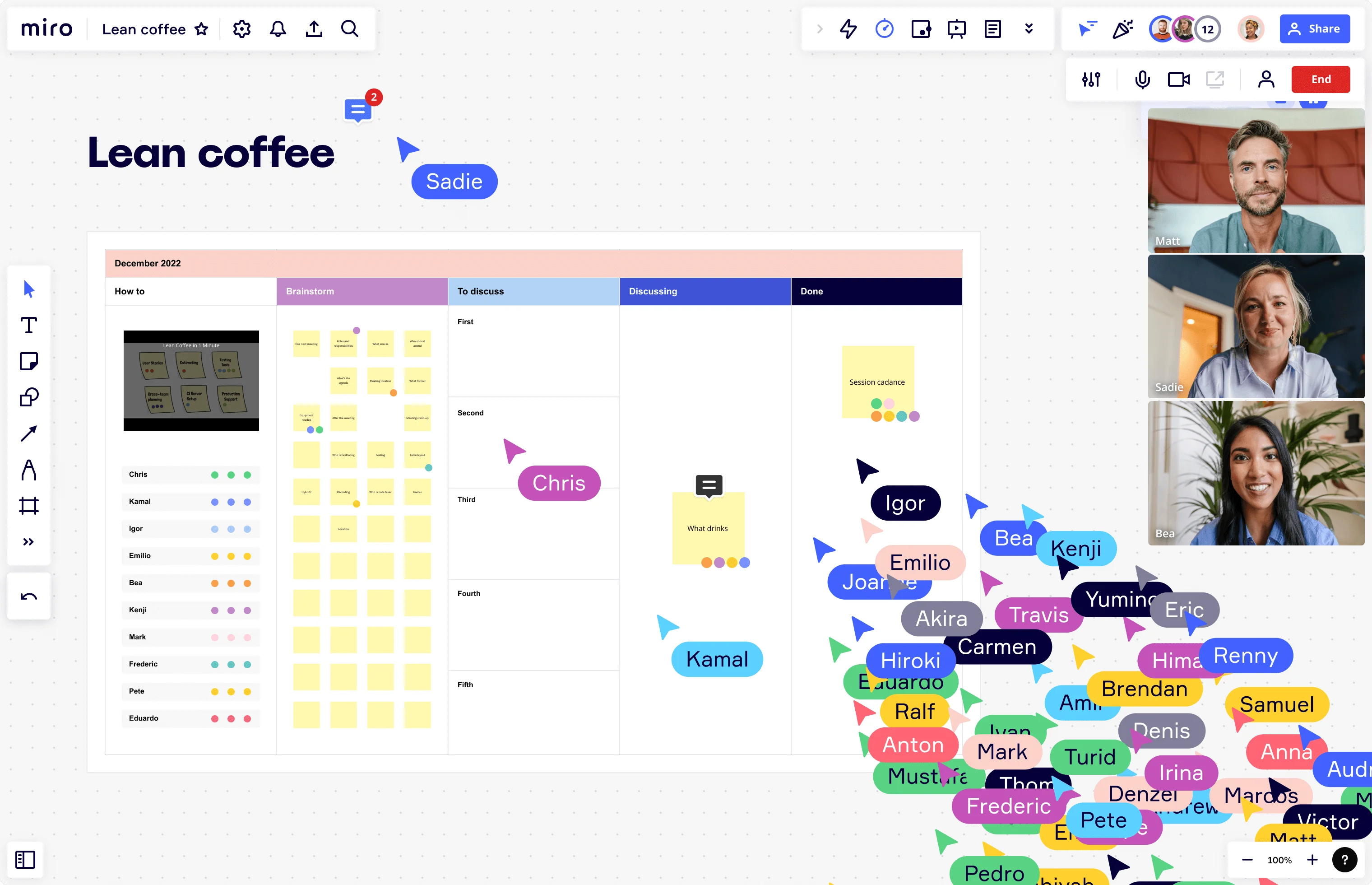
Lean Coffee is a meeting format that starts with a blank slate. Participants write down their thoughts and questions on sticky notes or a digital board. Next, the topics are briefly explained, and the group votes on them. This way, the most popular topics are discussed in segments, keeping the conversation focused. After each segment, the group decides whether to continue the discussion or move on to the next topic. This ensures that the conversation stays dynamic and relevant to everyone involved.
Do you need to run a Lean Coffee meeting?
When deciding whether to adopt the Lean Coffee approach for meetings, there are several factors to consider. Here's a breakdown of the reasons why:
Encourage equal participation
Traditional meetings can sometimes be dominated by the loudest voices or those in leadership positions. Lean Coffee levels the playing field, allowing every participant to propose topics and vote on what matters most to them. This democratic approach ensures that all voices are heard and valued, fostering a more inclusive and respectful team culture.
Break down silos
In many organizations, departments or teams work in isolation, leading to silos that hinder collaboration and knowledge sharing. Lean Coffee meetings encourage cross-functional participation, enabling people from different areas to contribute their perspectives. This cross-pollination of ideas can lead to innovative solutions and a stronger, more cohesive organizational culture.
Surface new ideas and address issues that matter most
It's not uncommon for important topics to be overlooked in the hustle of daily tasks and predefined meeting agendas. Lean Coffee provides a structured yet flexible framework for surfacing new ideas and discussing pressing issues. Because participants generate and prioritize topics, the discussions will likely be highly relevant and engaging, leading to actionable insights.
Foster a culture of innovation and continuous improvement
The structure of a Lean Coffee meeting promotes creativity and innovation by allowing participants to think beyond the conventional and question established norms. This type of environment facilitates the exploration of various topics, even those that may not typically be covered in a standard meeting. Over time, this practice can foster a culture of perpetual improvement, where team members feel empowered to propose changes and experiment with new ways of working.
Enhance team dynamics and collaboration
Running Lean Coffee meetings on a regular basis can have a positive impact on team dynamics and collaboration. Teams can develop mutual respect and understanding by participating in discussions relevant to all members. Choosing topics together and navigating discussions can also help improve team cohesion and collaboration skills, making it easier to work together to tackle projects and challenges.
Is Lean Coffee right for you?
If you feel that your meetings lack engagement, democratic participation, and a focus on what truly matters to your team, a Lean Coffee template might be the solution. This structured yet flexible approach can help you shake up the status quo, break down barriers to innovation, and make your meetings more productive and enjoyable. Whether you're seeking to achieve any of these goals or all of them, Lean Coffee can help.
The many ways you can run your Lean Coffee meeting
The Lean Coffee approach is highly adaptable and can be easily customized to suit different settings and contexts.
The Classic Setup
This is the original Lean Coffee format, ideal for in-person meetings. You'll need a timer, sticky notes, pens, and a large surface (like a whiteboard or a large table) where participants can post their topics.
Best for:
- Small to medium-sized teams who can meet physically.
- Teams in the early stages of formation or those seeking to strengthen interpersonal relationships.
- Groups tackling complex challenges that benefit from close collaboration and trust.
Why it works:
- Fosters a sense of camaraderie and immediacy, essential for building team dynamics.
- Makes it easier to gauge reactions and encourage spontaneous interaction, enriching the discussion.
- Ideal for brainstorming sessions where the energy of in-person interaction can lead to breakthrough ideas.
The Remote Rendezvous
Lean Coffee has adapted to the digital realm with the rise of remote work, using online collaboration tools that feature boards, sticky notes, and voting functionalities to gather teams from anywhere in the world.
Best for:
Fully distributed teams or those with flexible work policies.
- Organizations looking to include voices from different geographical locations in the decision-making process.
- Teams that are comfortable navigating digital tools and value the efficiency and inclusivity they offer.
Why it works:
- Ensures equal participation from all members, regardless of their physical location.
- Digital tools offer added benefits like easy documentation and asynchronous contribution, extending the meeting's impact.
- Supports a high level of engagement and collaboration, critical for remote team cohesion and productivity.
The Hybrid Huddle
The hybrid model combines physical and digital tools, catering to teams that are partly remote and partly on-site. In this setup, a physical board can be set up for on-site participants, while remote members can contribute via a digital board that mirrors the physical one.
Best for:
- Teams that are partly remote and partly on-site, needing to bridge the physical distance between members.
- Organizations transitioning towards more flexible working arrangements but still valuing some level of in-person interaction.
- Groups that aim to combine the spontaneity of face-to-face meetings with the inclusivity of virtual participation.
Why it works:
- Provides a balanced approach, allowing teams to leverage the benefits of both in-person and virtual interactions.
- Ensures that all members have an equal chance to contribute, fostering a more inclusive meeting culture.
- Requires careful coordination but can offer a rich, collaborative experience that suits diverse team configurations.
Selecting the right Lean Coffee setup
When choosing your Lean Coffee approach, consider:
- The nature and location of your team members.
- The objectives of your meeting and the level of collaboration required.
- Your team's familiarity and comfort with digital collaboration tools.
Each format has its unique advantages, making Lean Coffee an adaptable framework for fostering productive, engaging, and inclusive discussions. By aligning the meeting structure with your team's needs and preferences, Lean Coffee can become a powerful tool for innovation and improvement.
Tools for running a Lean Coffee meeting
Using the right tools can significantly impact the success of your Lean Coffee sessions, especially for teams that are spread out or using hybrid models. To help you make your Lean Coffee meetings as productive and engaging as possible, here's a list of some standout tools that can assist in facilitating your sessions.
1. Miro
Why it stands out: Miro is the workspace where teams can brainstorm, organize ideas, and vote seamlessly. Its intuitive interface makes it easy for participants to add sticky notes, comment, and collaborate in real time.
Best for: Teams looking for an adaptable, innovative workspace that supports brainstorming, planning, and agile practices.
2. Trello
Why it stands out: Trello's board and card system is perfect for organizing Lean Coffee topics. Cards can be moved from a "To Discuss" list to "Discussing" and then to "Discussed," providing a clear visual representation of the meeting's progress.
Best for: Teams that need a simple, intuitive tool for managing tasks and discussions with the ability to integrate with other work tools.
3. FunRetro
Why it stands out: Specifically designed for retrospectives, FunRetro can easily be adapted for Lean Coffee meetings. Its simple column layout allows for easy organization of discussion topics, voting, and timekeeping.
Best for: Teams conducting regular retrospectives or Lean Coffee sessions who want a straightforward, focused tool for facilitating discussions.
Choosing the Right Tool
When selecting a tool for your Lean Coffee meeting, consider:
- Your team's familiarity with the tool and its learning curve.
- The specific features you need for your Lean Coffee session (e.g., voting, timekeeping, ease of topic addition).
- Integration capabilities with your team's existing workflow and tools.
Each tool offers unique features that can enhance the Lean Coffee experience, from fostering real time collaboration to integrating seamlessly into your team's workflow. By choosing the tool that best aligns with your team's needs and preferences, you can ensure that your Lean Coffee meetings are not only productive but also a highlight of your team's collaborative efforts.
What now? Host better Lean Coffee meetings
By understanding the concept of Lean Coffee and having the necessary tools to facilitate it, anyone can host meetings that are not only well-received but also leave participants feeling fulfilled and in agreement. The key to a successful Lean Coffee meeting is to encourage participation and welcome all ideas, which fosters a culture of open communication and continuous improvement.
Using Lean Coffee can transform ordinary meetings into remarkable ones that promote productive, engaging, and innovative discussions. So, brew some coffee and let the dynamic exchange of ideas begin, unlocking the collective potential and insights that await discovery. Here's to a future filled with impactful and meaningful gatherings!
Author: Miro Team Last update: August 13, 2025